
Common Financial Problems a Financial Consultant Can Solve in Dubai

If you have recently moved to Dubai, chances are you have experienced this feeling.
If you have recently moved to Dubai, chances are you have experienced this feeling.
You may have come from Europe, where high taxation reduced a significant portion of your income every month. Or perhaps you moved from a country where local currency instability made saving almost impossible. Now, suddenly, you are earning in dirhams or dollars. Your salary looks stronger. Your opportunities feel bigger. And for the first time, financial breathing space seems real.
At least, that’s what you expected.
But something unexpected happened.
Despite the excitement of earning more, you begin to notice a strange pattern. Your income has increased yet your savings have not. In fact, it may even feel like your money is slowly shrinking. Not dramatically. Not catastrophically. But quietly. Gradually.
Like ice cream melting in your hand on a warm Dubai afternoon.
You are not reckless. You are not irresponsible. Your income has improved. And in many cases, you are no longer paying the heavy taxes you once did. So why does it feel like financial progress is not happening? If you remember Michael the recurring character in many of our discussions at Daraltharwa you already know the answer.
Michael represents many of the clients who walk into our office every week. He is a British professional who spent years paying substantial taxes in the UK. With hope and ambition, he moved to Dubai, secured a strong income, and looked forward to finally building wealth.
On paper, everything made sense.
Higher net income.
Lower tax burden.
Greater financial opportunity.
Yet, despite these advantages, Michael was not saving. His bank balance did not reflect his earning power. Month after month, the numbers did not accumulate the way he expected.
The reason was not hidden debt. It was not poor investment choices.It was not a sudden financial emergency. It was something far more subtle.
Lifestyle inflation
Lifestyle inflation happens when your expenses rise in proportion to or faster than your income. As earnings increase, spending habits adjust upward almost automatically.
A slightly better apartment becomes necessary.
Frequent dining becomes normal.
Ride-hailing replaces public transport.
Weekend brunches become routine.
Upgraded devices feel justified.
Individually, none of these decisions seem unreasonable. In fact, they often feel deserved. After all, you are earning more. Why shouldn’t your lifestyle reflect that?
The problem is not the lifestyle itself.
The problem is the absence of structure.
In Dubai, lifestyle inflation is particularly common. The city is built around convenience, comfort, and opportunity. Everything is accessible and everything has a price. For professionals earning in strong currencies, the psychological shift is powerful. Compared to previous circumstances, spending feels lighter. But over time, these incremental upgrades quietly absorb the additional income that was meant to build wealth.
Michael experienced exactly this.
His rent was slightly higher than necessary but the building was nicer.
His dining expenses doubled but networking mattered.
His leisure spending increased because “this is Dubai.”
None of these were extreme decisions. But collectively, they prevented accumulation.
This is the paradox many expatriates face:
Income increases, but wealth does not.
And this is precisely where a financial consultant becomes critical. A financial consultant does not judge your lifestyle.
A consultant pauses the momentum.
They step in and say:
“Let’s stop. Let’s examine the structure. Let’s understand where the money is flowing.”
In Michael’s case, the first step was not investment advice. It was clarity. Breaking down income. Categorizing expenses. Identifying growth leakage. Quantifying lifestyle inflation.
Once the pattern became visible, change became possible.
A financial consultant helps by:
- Identifying hidden lifestyle inflation
- Separating emotional spending from intentional spending
- Rebuilding savings structure
- Aligning income with long-term financial goals
- Creating a strategy that supports both lifestyle and wealth growth
The role is not to reduce your quality of life. It is to ensure your income translates into real progress. If you have moved to Dubai and noticed that despite earning more, your savings do not reflect it, you are not alone.
And you are not failing.
You are likely experiencing the same structural issue Michael faced.
Without direction, income flows. With structure, income builds. That difference between earning well and building wealth is exactly where professional financial guidance begins.

Poor Budgeting and Cash Flow Mismanagement
Lifestyle inflation is often just a symptom.
The deeper issue is usually something more structural: a lack of real control over cash flow.
Many people who move to Dubai earn strong incomes. Some receive fixed salaries. Others work on projects. Some run their own businesses. But when asked, “Exactly how much money enters your life each month and exactly how much leaves it?” the answers are often vague.
This is the core problem:
People see income, but they do not see cash flow.
Cash flow is the actual movement of money not the salary figure on a contract, not the balance visible on a bank app on a specific day, but the continuous inflow and outflow throughout the month. Michael was stuck at precisely this point. He earned well and felt less financial pressure compared to his life in the UK. But once his cash flow was mapped clearly, it became obvious that his income and expenses had never truly been structured — they were simply happening.
In Dubai, because of lifestyle speed and expense diversity, cash flow can easily drift out of control. Small recurring payments, online purchases, subscriptions, social costs, short trips, visa renewals, insurance, and countless minor transactions all contribute to the overall flow. If these movements are not reviewed systematically, people only see the end result: a lower balance than expected.
Poor cash flow management typically shows up in several ways:
First, no clear monthly target.
People know roughly how much they earn, but they do not know how much should remain at the end of the month.
Second, weak expense categorization.
All spending feels equally necessary in the moment. The distinction between essential costs and habit-driven expenses becomes blurred.
Third, no structure for income fluctuations.
In Dubai, many professionals and business owners experience variable income. Without a system to absorb fluctuations, each month is handled reactively rather than strategically.
Fourth, mixing personal and business finances.
This is common among entrepreneurs. When financial boundaries are unclear, managing cash flow becomes extremely difficult.
In financial consulting sessions, one of the first steps is to visualize the flow of money. Not to judge but to clarify. When income and expenses are mapped numerically and categorized properly, confusion begins to disappear.
Interestingly, in many cases the issue is not “lack of money.”
It is misalignment between inflows and outflows.
Imagine someone earning 20,000 AED per month. If most expenses are front-loaded in the first two weeks, the final weeks of the month become psychologically stressful. This stress often leads to impulsive decisions, dipping into savings, or relying on credit. Over time, stability weakens.
Michael realized that his pressure did not come from insufficient income it came from poor timing and structure. He learned that managing cash flow is not just about knowing numbers; it is about designing how money moves.
So how does a financial consultant help in this situation?
- By creating visibility.
- By structuring timing and allocation.
- By designing buffers for weaker months.
- By aligning spending patterns with financial goals.
The difference between someone who simply earns money and someone who benefits from their income often lies here: cash flow control.
If the first section addressed why money is not growing,
this section addresses why money is not under control.
Without mastering cash flow, no investment strategy or long-term financial plan can remain stable.
Inefficient Investment and Asset Allocation Decisions
Controlling lifestyle inflation and managing cash flow are essential. But there is a turning point many people reach after stabilizing their financial structure:
They begin to think about investing consciously.
Interestingly, the people who reach this stage are the same individuals we frequently see at Daraltharwa. These are not reckless spenders. They are not financially chaotic. They are professionals and business owners who have already managed to control their lifestyle and organize their cash flow. Many of them arrive here after going through earlier stages fixing budgeting issues, structuring income, separating personal and business finances. Once those foundations are stable, a new question emerges:
“How do I grow my money intelligently?”
This stage is different.
This is where the atmosphere changes.
This is where you begin to smell wealth.
At this point, people no longer want just stability. They expect growth. They want their money to work. They want clarity about how to turn disciplined income into long-term wealth.
But even here, a new risk appears: investing without structure. Dubai offers endless opportunities. Real estate projects, equities, private ventures, global funds, digital assets access is rarely the problem. The issue is alignment.
Many individuals invest reactively:
- Following market excitement
- Copying peers
- Chasing recent performance
- Diversifying randomly rather than strategically
Michael experienced this phase too. Once he controlled his spending and stabilized his monthly cash flow, he felt confident. He began investing more actively. But his early portfolio lacked structure. He owned assets but they were not aligned with a defined strategy.
That is when a deeper question surfaced:
Not “What should I buy?”
But “What should my portfolio look like?”
This distinction is critical.
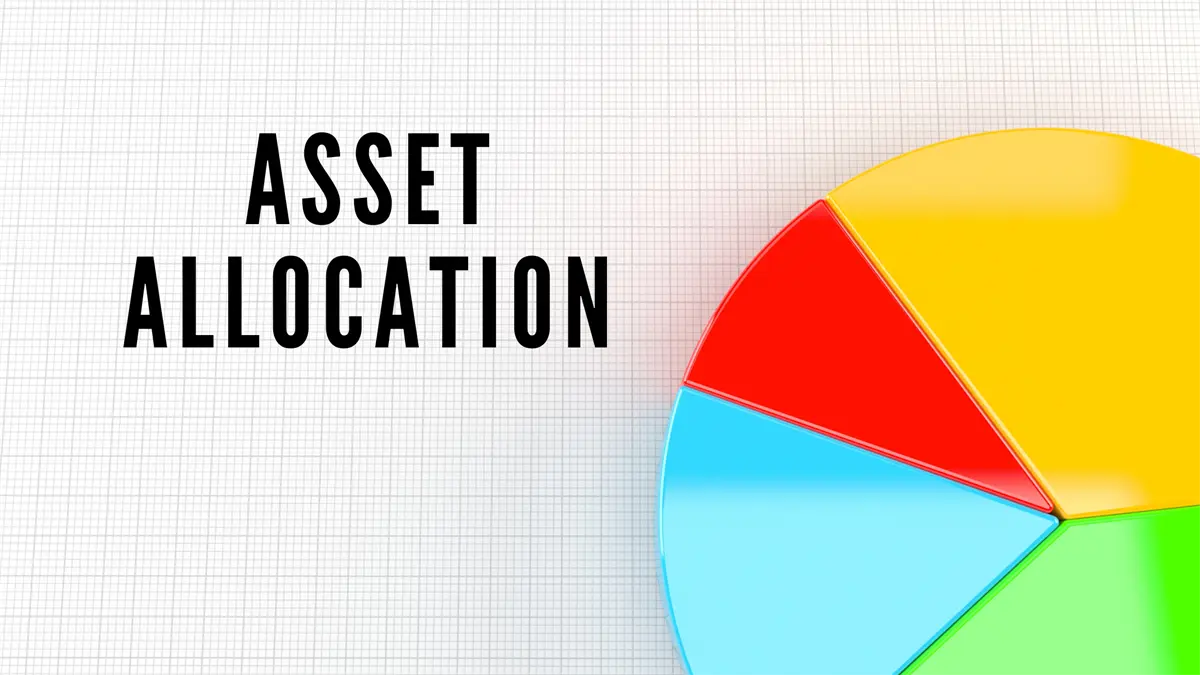
Asset allocation is not about selecting individual investments. It is about designing a portfolio based on:
- Risk tolerance
- Time horizon
- Liquidity needs
- Geographic exposure
- Long-term objectives
Without clear allocation, even good assets can create unstable outcomes.
In Dubai, expatriates and entrepreneurs face unique structural factors:
- Employment-linked residency
- Concentrated exposure to one market
- Currency considerations
- No automatic retirement system
- High opportunity velocity
If investments are made without considering these realities, risk accumulates quietly.
This is why strategic investment advisory becomes essential at this stage.
At Daraltharwa, many of our core clients are precisely here. They have moved beyond survival. They are no longer struggling with monthly pressure. They have controlled their lifestyle and organized their finances.
Now they want more.
They want:
- Measurable growth
- Long-term wealth planning
- Clear allocation frameworks
- Risk-managed portfolios
- A path toward financial independence
This stage is powerful because expectations shift. People expect their money to grow and they should.
But growth without design can quickly become volatility.
A financial consultant brings discipline into this stage by:
- Conducting structured risk profiling
- Designing asset allocation models
- Balancing growth and protection
- Managing liquidity
- Monitoring performance against objectives
When Michael restructured his portfolio under a defined allocation model, something changed. Volatility reduced. Clarity increased. His investments began serving a purpose instead of existing as scattered decisions.
This is the point where income transforms into capital.
And capital begins transforming into wealth.
Not through speculation.
Not through shortcuts.
But through design.
Without structure, portfolios drift.
With structure, portfolios compound.
This stage is not about fixing mistakes.
It is about building intention.
And this is where financial consulting evolves from damage control to wealth creation.

.svg)


